


The word “superpower” has become controversial in ADHD spaces. People hear it and think you’re dismissing the struggle. Like you’re saying it’s all sunshine and hyperfocus and “aren’t we so quirky?”
I get the frustration. I do.
But superpowers in stories come from being different. From having something in you that sets you apart. That’s the whole genre. The power and the pain come from the same place.
I watched Wicked for the 12th time today (specifically, For Good. If it’s all of them, that would be 112. I’m not making this up). Anyway, it’s literally this. Elphaba gets cast out for being green, for being different, for having power that scares people. What makes her “wicked” to everyone else is the same thing that makes her extraordinary.
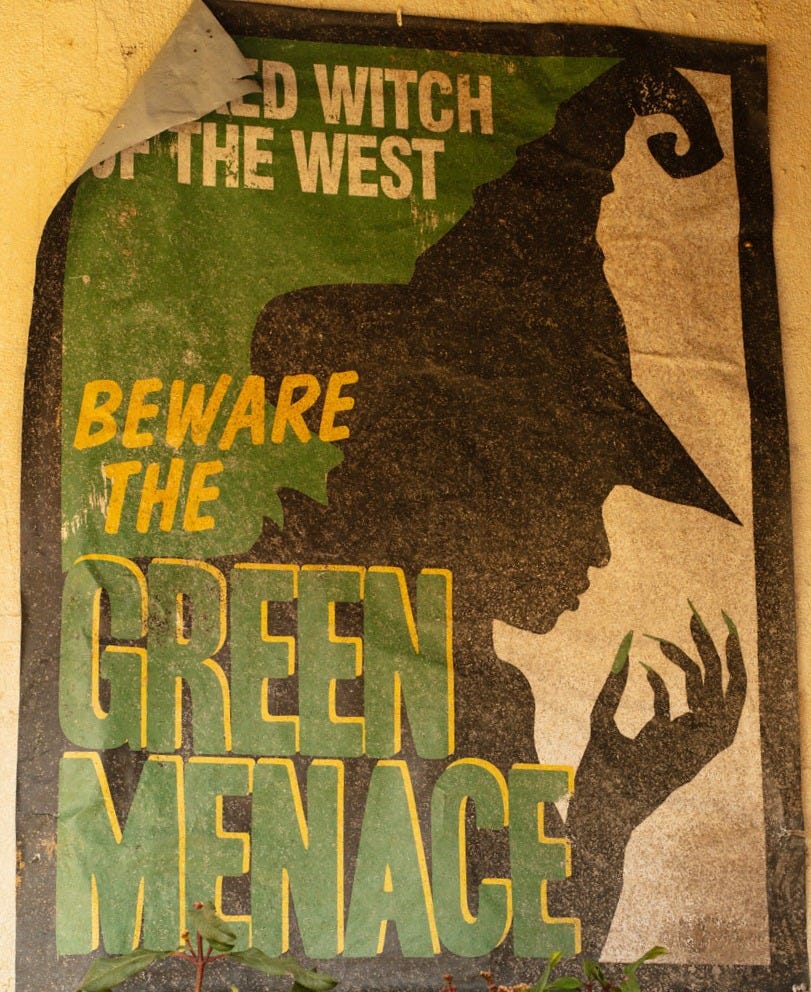
So I don’t think the word is as toxic as people make it out to be.
Still. If “superpower” is the thing standing between you and seeing what you’ve got, fine. Let’s call them... traits.
Traits are neutral. Undeniable. You can argue with “superpower” all day, but you can’t argue with: this is a thing my brain does. These traits can go either way, depending on context. Use them or don’t. But they’re there.
And to be clear: I’m not saying ADHD is a gift and I wouldn’t change it and everything is fine. I take medication every day just to exist in my default mode. My weirdness is a liability. It makes my life harder. People aren’t always drawn to me.
And still: I have a different brain, and some of what it does is genuinely good. May I?
In my 19 years of ADHDing and researching ADHD and working with ADHDers, I can’t help but notice some patterns. Take ‘em or leave ‘em, but they’re there. These are tendencies directly related to ADHD, and while they exist in the general population too, we have a natural proclivity. Like some people have a natural proclivity to dance or theater. (By the way, isn’t that a weird word?) It doesn’t mean nobody else can do it. It just means we’re drawn to it.
Here are some that I’ve noticed. This isn’t all of them by any means.
Creativity. We’re creative, yes, and that includes art. But it’s not limited to that. We’re creative at solving problems, creative at conversations, creative at any field. You could be a creative data scientist, a creative systems engineer, a creative stay at home parent, a creative entrepreneur. That’s the magic of diversity. It shows up wherever you are. It doesn’t care about your job title.
Creativity is just finding new ways to do things. Seeing connections other people don’t. Coming at something sideways because the straight path doesn’t make sense to your brain. And there’s a whole inner world in there. We can imagine entire universes, play out conversations before they happen, build things in our heads that don’t exist yet.
We’re also big inventors. We come up with crazy ideas all the time. You know those online generators that spit out random ideas? If you fuck with those, you’d fuck with us.
We’re some of the best coaches, experts, researchers, counselors, consultants, and business owners out there. It’s not just that we can come up with stuff and monetize it. We love getting jobs where we get to come up with stuff. We’re like work dogs doing our little work, and I love that for us.
Questioning authority. I’m reading about ancient history right now, archaeological findings and stuff, and it’s full of examples of peoples toppling someone who got a little too in charge. We’re the canaries in the coal mine, the ones noticing something’s off before everyone else does. Noticing things in general, actually. Little details, the tiniest stuff. Remembering really specific things that other people gloss over.
Curiosity. We’re lifelong learners because we’re curious and inquisitive. Same shit that gets us in trouble, by the way. Asking too many damn questions. But also the reason we know so much about so many random things.
Critical thinking. We’re the ones who spoil the ending of the murder mystery, because we can’t help but notice the weird details that don’t add up. Good detectives, whether we want to be or not. Fast, dopamine-seeking brains that are also sensory sensitive, which is like... being a bloodhound at a perfume counter. A race car with no muffler.
We spot fallacies. We don’t fall for bad arguments. We question rules and poke holes and see through bullshit. And we get better and better at arguing and debating. Too good, actually.
And honestly? We can be ruthless. Judgmental. Quick thinkers with quick wit and a snappy mouth. The same brain that dissects arguments can dissect people, and we notice everything. Which means we notice weaknesses, too. That’s a lot of power to have. People don’t forget when you use it on them. It’s not a toy.
Pattern recognition. We see patterns everywhere: in conversations, in behavior, in systems, in data. We notice when something breaks the pattern, when something doesn’t fit, when something’s about to go wrong. It’s part of why we’re good detectives, good coaches, good at sussing out what’s really going on underneath what people are saying.
Problem-solving. We’re good at coming up with solutions, which is funny because I bet most ADHDers think that’s what they suck at. The irony is thick.
Empathy. Noticing what people feel, sometimes before they notice it themselves. Sometimes used for good, sometimes for evil, because not everyone with ADHD is a good person. And being tuned in like that can also mean being easily manipulated. The antenna picks up everything, including the stuff you’d rather not receive.
Open-heartedness. We wear our hearts on our sleeve. We can approach art, performance, music, even nature with this raw openness that other people sometimes guard themselves against. We cry at movies. We get chills at live performances. We feel things fully. And that’s not weakness. It’s access.
These traits aren’t morally good. They’re just traits. They can go either direction depending on the day, the context, the person wielding them.
The curiosity that makes someone a lifelong learner is the same thing that made them the kid who wouldn’t shut up in class. The empathy that makes you deeply connected to people is the same thing that makes you easy to manipulate. The critical thinking that makes you sharp is what gets you labeled “argumentative.” The noticing everything is the overwhelm.
Same trait. Different context. Different audience.
So if “superpower” doesn’t work for you, fine. Call them traits. That’s what they are.
Personally? I’m not ready to give up “superpower.” I want to feel good about my brain. I think I’ve earned that.
But whatever you call them, they’re yours. And I’d love to hear the ones I missed. Tell me in the comments what traits you’ve noticed in yourself. This list is just a start.
Back to Wicked.
In an interview, Cynthia Erivo, who plays Elphaba, was asked about how the movie should make people feel. How Elphaba should make people feel.
She said that she hopes that those who feel different will see this and realize that the thing that is different about you makes you really special. And maybe, it might make you fly.
That’s it. That’s the whole thing. ♥️
I love the pivot to superpower metaphors.
X-Men was my safe space as a neurodivergent kid. I have always and continue to feel like a mutant who just doesn’t know how to use my powers. I spent my life coming at it from that angle of investigation and, though it was a bumpy journey, on the whole it was an extremely productive and fruitful lens for me.
I feel less like a wandering mutant these days and more like Professor X must have felt before he started his school. So many amazing traits have I discovered, because you’re exactly right: there is a core set of skills we all spin into personalized magic. We just usually have to figure that out on our own and that’s the tragedy in it for me.
No doubt, it's superpower!